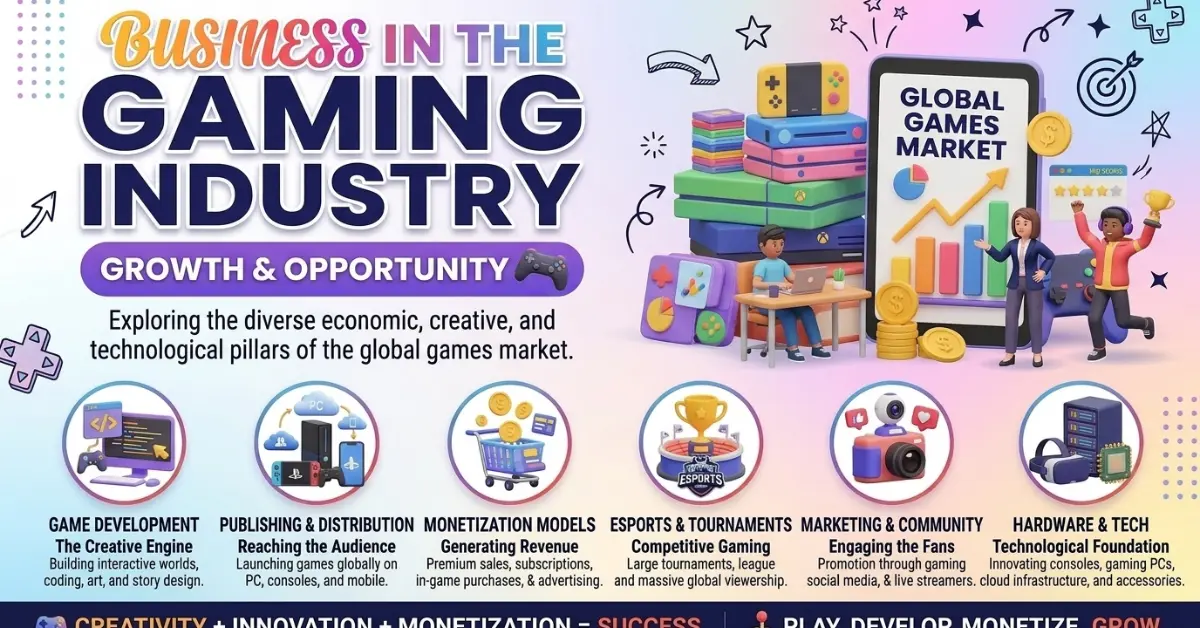
The Gaming Industry Market Share, Shows how different companies, platforms and regions contribute to the global gaming market. It helps explain the role of mobile games, PC gaming and consoles in the industry. The gaming industry market share also shows which companies lead the market and how gaming trends change over time. Technology, online gaming and player preferences continue to shape this growing industry. Understanding these changes helps readers see how the gaming market works today and what may influence its future.
What Is Gaming Industry Market Share?
Gaming industry market share means the percentage of the total gaming market controlled by a company, platform or business. It helps show how much of the market belongs to mobile games, PC games and console games. For example, if a gaming company earns 20% of the total revenue in a specific market, its market share is 20%. This information helps people compare gaming companies, understand player preferences and see which platforms perform well. Market share can be measured by revenue, game sales or the number of active players, depending on the data used.
Global Gaming Industry Market Share and Market Size
The global gaming market continues to grow as more people play games on different devices.
- Market Size: Global gaming revenue shows the total money earned from video games worldwide.
- Mobile Gaming: Smartphones reach a large number of players across different countries.
- PC Gaming: Computer games attract players through online play, esports and advanced graphics.
- Console Gaming: Consoles earn revenue through games, subscriptions and digital content.
- Market Growth: New technology and online services create more opportunities for gaming businesses.
Gaming market size and market share help show how the industry performs and changes over time.
Gaming Industry Market Share by Platform
Gaming platforms hold different shares of the market based on revenue, players and game sales.
- Mobile Gaming: Smartphones and tablets reach a large number of players through free and paid games.
- PC Gaming: Computers attract players with online games, advanced graphics and competitive gaming.
- Console Gaming: PlayStation, Xbox and Nintendo offer dedicated gaming experiences and exclusive titles.
- Cloud Gaming: Players can stream games over the internet without needing powerful gaming hardware.
- Cross Platform Gaming: Players can enjoy compatible games across mobile devices, computers and consoles.
The market share of each platform depends on player demand, game availability, technology and spending habits.
Mobile Gaming Industry Market Share
Mobile gaming holds an important position in the gaming industry because smartphones make games easy to access.
- Large Player Base: Smartphones allow people of different ages to play games anywhere.
- Free toPlay Games: Many mobile games attract players without an upfront payment.
- In App Purchases: Players can buy extra lives, characters and virtual items.
- Mobile Game Advertising: Developers earn money by showing ads inside games.
- Popular Game Genres: Puzzle, action, racing and strategy games attract mobile players.
Mobile gaming continues to influence the gaming industry through easy access, flexible payment options and a wide range of games.
PC Gaming Industry Market Share
PC gaming holds an important place in the gaming industry because it offers flexible controls, powerful hardware and a wide range of games.
- Gaming Performance: Powerful computers support high-quality graphics and smooth gameplay.
- Popular Game Genres: Strategy, simulation, action and multiplayer games attract PC players.
- Online Gaming: PC gamers can connect with friends and compete with players worldwide.
- Gaming Hardware: Graphics cards, processors and gaming accessories improve the playing experience.
- Digital Game Stores: Platforms such as Steam and Epic Games Store make PC games easy to purchase and download.
PC gaming remains competitive through advanced technology, online communities and a wide selection of games.
Console Gaming Industry Market Share
Console gaming holds a strong position in the gaming market through dedicated devices, exclusive games and advanced features.
- Major Brands: PlayStation, Xbox and Nintendo are leading names in console gaming.
- Exclusive Games: Special titles attract players to specific console platforms.
- Hardware Sales: Console sales contribute to the industry’s revenue.
- Online Services: Multiplayer access and gaming subscriptions create regular income.
- Player Experience: High quality graphics, controllers and smooth gameplay attract console users.
Console gaming remains an important part of the gaming industry because of its exclusive titles, loyal players and entertainment features.
Gaming Industry Market Share by Region
The gaming industry market share varies by region because of player demand, internet access and spending habits.
- Asia Pacific: A major gaming region with strong mobile gaming activity and large player communities.
- North America: A key market for console games, PC gaming and paid gaming services.
- Europe: A strong gaming market with active PC, console and mobile players.
- Latin America: Growing internet access and smartphone use support gaming activity.
- Middle East and Africa: Expanding digital access and a young population create opportunities for gaming businesses.
Each region contributes differently to the global gaming market, with growth shaped by local preferences, technology and spending power.
Leading Companies in the Gaming Industry Market Share
Major gaming companies compete through popular games, gaming platforms and digital services.
- Microsoft: Owns Xbox and operates gaming services such as Xbox Game Pass.
- Sony: Leads the PlayStation business with exclusive games and console sales.
- Nintendo: Attracts players through its Nintendo Switch platform and famous game franchises.
- Tencent: Holds investments in gaming companies and operates popular online games.
- Electronic Arts (EA): Earns revenue from sports games, popular franchises and online gaming services.
These companies influence the gaming market through their products, player communities and business strategies.
Gaming Industry Market Share by Revenue Model
Gaming companies use different revenue models to earn money and increase their market share.
- Paid Games: Players pay once to buy and play a game.
- Free to Play Games: Games are free to start but may offer paid features.
- In Game Purchases: Players buy skins, characters and other virtual items.
- Gaming Subscriptions: Players pay regularly to access games or online services.
- Advertising Revenue: Developers earn money by showing advertisements in games.
These revenue models help gaming companies attract players, earn income and compete in the global gaming market.
Factors Affecting Gaming Industry Market Share
Several factors influence how gaming companies and platforms compete in the global market.
- Game Quality: Good graphics, engaging stories and smooth gameplay attract more players.
- Pricing: Affordable games and consoles can reach more customers.
- Technology: Better hardware, cloud gaming and new features influence player choices.
- Marketing: Advertising and partnerships help gaming companies reach larger audiences.
- Player Preferences: Popular genres and changing interests affect market demand.
These factors shape competition and influence how gaming companies grow their market share.
Common FAQs about Gaming Industry Market Share
Here are some FAQs of Gaming Industry Market Share:
Which gaming genre earns the most money worldwide?
Mobile puzzle, action, sports and role playing games can generate large revenue, depending on the market and year.
How do analysts calculate gaming market share?
Analysts compare a company’s or platform’s revenue with the total revenue of the market being measured.
Do independent game developers affect market share?
Yes, independent developers can attract large audiences through creative games and digital distribution platforms.
How do game subscriptions affect the gaming market?
Subscriptions provide recurring revenue and give players access to game libraries for a monthly or yearly fee.
Why do gaming companies acquire other studios?
Companies may acquire studios to gain popular game franchises, skilled developers and new customers.
How do game streaming services influence the gaming industry?
Streaming services help players watch gameplay, follow creators and discover new games, which can increase interest in certain titles.
Does game age affect its market performance?
Yes, older games can continue earning money through updates, downloadable content, online features and loyal player communities.
How do regulations affect gaming industry market share?
Rules about privacy, age limits, digital purchases and advertising can affect how games are developed, marketed and sold in different countries.
Conclusion
Gaming industry market share shows how companies and platforms compete in the growing gaming market. Mobile games, PC gaming and consoles each serve different players and business needs. Technology, game quality, pricing and player preferences continue to influence industry competition. Companies that create enjoyable games and respond to changing customer demands may improve their market position. As gaming continues to grow, new technologies and business models will shape its future.