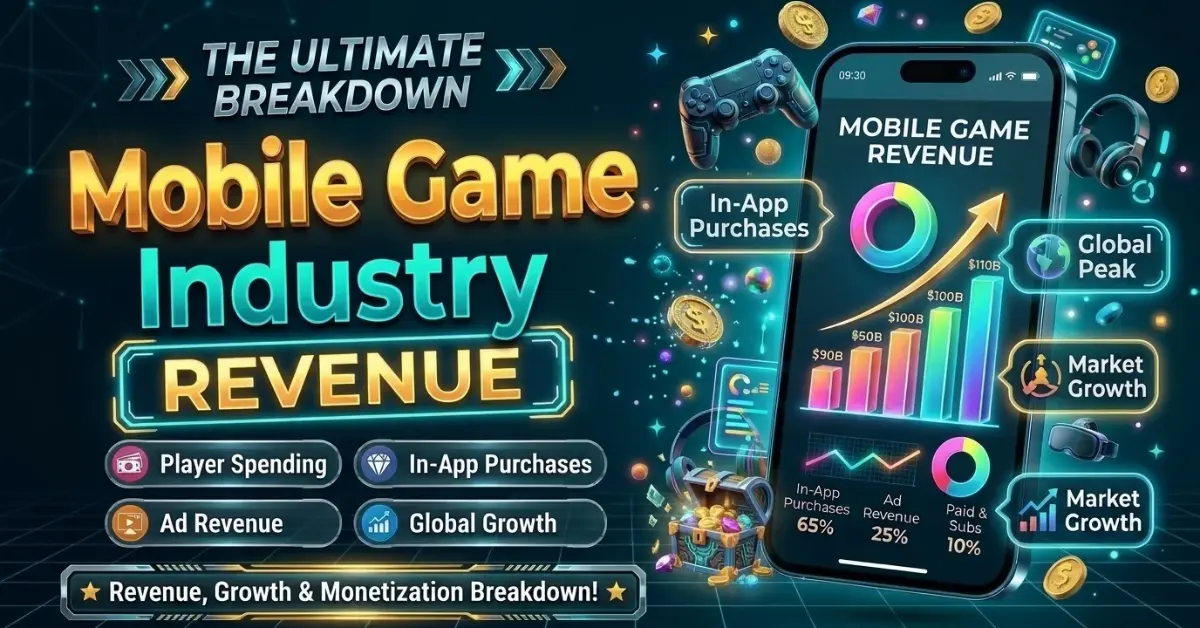
Mobile Game Industry Revenue, Shows how much money the mobile gaming market earns from different sources around the world. These sources include in game purchases, advertisements, paid downloads and subscriptions. Millions of people play games on smartphones and tablets every day, making mobile gaming an important part of the global gaming business. Popular game types such as puzzles, action, strategy and role-playing attract players of different ages. Mobile game industry revenue also depends on player spending, game quality, marketing and new technology. By looking at market data and growth trends, readers can see how mobile games earn money and what By looking at market data and growth trends, readers can see how mobile games earn money and what may shape the industry’s future.
What Is Mobile Game Industry Revenue?
Mobile game industry revenue is the total money earned by businesses from games played on smartphones and tablets. This money comes from different sources, such as in-game purchases, advertisements, paid downloads and subscriptions. Some games are free to play but earn money when players buy extra lives, new characters, coins or special items. Other games show ads to players and receive payments from advertisers. Mobile game industry revenue helps show how much money the market generates and how the gaming business changes over time. It also helps game developers and companies understand player spending habits and plan better games for the future.
How Much Revenue Does the Mobile Game Industry Generate?
The mobile game industry generates billions of dollars each year through different sources of income.
- Global Market Revenue: Mobile games earn billions of dollars worldwide from player spending and advertising.
- In App Purchases: Players spend money on extra lives, coins, characters and special items.
- Game Advertising: Free games earn money by showing advertisements to players.
- Top Gaming Markets: Countries such as the United States, China and Japan contribute a large share of mobile game spending.
- Market Growth: Revenue changes each year due to new games, player demand and changes in spending habits.
Mobile game industry revenue continues to make mobile gaming an important part of the global gaming market.
How Has Mobile Gaming Revenue Changed Over the Years?
Mobile gaming revenue has changed over time as smartphones, internet access and gaming technology have improved.
- Early Growth: Mobile games first earned money mainly through paid downloads and simple advertisements.
- Smartphone Expansion: Better smartphones helped more people play mobile games around the world.
- Free to Play Games: Many games started offering free access with optional in-game purchases.
- Pandemic Period: Mobile gaming activity increased during the COVID-19 pandemic as more people stayed at home.
- Recent Market Changes: Revenue has been affected by player spending habits, advertising changes and competition between game developers.
Mobile gaming revenue has grown into a major part of the gaming market, although its growth rate changes from year to year.
What Are the Main Sources of Mobile Game Revenue?
Mobile game industry revenue comes from several sources that help game developers and companies earn money. One major source is in-app purchases, where players buy coins, extra lives, new characters and special items inside games. Another source is in-game advertising, where companies pay to show ads to players. Paid downloads also generate revenue when users purchase a game before playing it. Some mobile games offer subscriptions that provide special features, extra rewards or an ad-free experience for a monthly fee. These income sources help developers cover game development costs, release updates and create new gaming experiences. The amount of money earned depends on the number of players, their spending habits and the type of game.
Which Mobile Game Genres Generate the Most Revenue?
Different mobile game genres earn money in different ways depending on player interest and spending habits.
- Strategy Games: These games earn money through upgrades, special items and in-game purchases.
- Role Playing Games: Players spend money on characters, equipment and extra game features.
- Puzzle Games: These games earn revenue from advertisements, extra lives and level boosters.
- Casino Games: Social casino games may earn money through virtual coins and optional purchases.
- Action Games: These games generate income through character upgrades, skins and special rewards.
Strategy, role-playing, puzzle and other popular genres contribute to mobile gaming revenue, but their rankings vary by platform, region and reporting period.
Which Countries and Regions Earn the Most from Mobile Games?
Some countries and regions generate more mobile game revenue because of their large player base and strong spending habits.
- United States: A major market where players spend money on in-game items and premium features.
- China: One of the world’s largest mobile gaming markets with many active players and popular local games.
- Japan: A strong market for role-playing games, character-based games and in-game purchases.
- South Korea: Known for its advanced gaming technology and active mobile gaming community.
- Europe: Countries such as the United Kingdom, Germany and France contribute to mobile game spending.
- Southeast Asia: Markets such as Indonesia and Thailand have growing mobile gaming audiences.
Mobile game revenue varies by region because of player numbers, local preferences and spending habits.
How Do Android and iOS Contribute to Mobile Game Revenue?
Android and iOS help mobile games earn money through app stores, in-game purchases and advertising.
- Google Play Store: Android games earn revenue through purchases, paid downloads and in-game ads.
- Apple App Store: iOS games generate income from paid games, subscriptions and in-app purchases.
- Player Spending: Some players spend money on game items, upgrades and special features.
- Advertising Revenue: Free games on both platforms can earn money by showing ads.
- Market Differences: Revenue varies by country, player spending habits and the type of game.
Both Android and iOS play important roles in mobile game industry revenue by connecting developers with millions of players.
Which Mobile Games and Publishers Lead in Revenue?
Several popular mobile games and publishers earn high revenue through large player communities and in-game purchases.
- Honor of Kings: Earns money through character skins, game items and other in-game purchases.
- PUBG Mobile: Generates revenue from outfits, weapon skins and seasonal passes.
- MONOPOLY GO!: Earns money through virtual items, dice and special game events.
- Last War: Generates revenue through in-game purchases and player upgrades.
- Leading Publishers: Tencent, Scopely and NetEase are well-known companies with successful mobile games.
The leading games and publishers can change over time as player interests and spending habits shift.
How Do Mobile Game Developers Make Their Games More Profitable?
Mobile game developers can increase profits by improving game quality and keeping players happy.
- Improve Game Quality: Create enjoyable games with smooth controls and interesting features.
- Use Fair In App Purchases: Offer useful items and upgrades at reasonable prices.
- Show Balanced Ads: Place advertisements carefully without disturbing gameplay.
- Keep Players Engaged: Add new levels, rewards and regular updates to maintain player interest.
- Promote the Game: Use social media and suitable marketing methods to reach more players.
Better gameplay, fair pricing and smart marketing can help developers increase mobile game profits.
What Challenges Could Affect Mobile Game Industry Revenue?
Several challenges can affect mobile game industry revenue and make it harder for developers to earn money.
- High Marketing Costs: Promoting a mobile game can be expensive, especially for small developers.
- Strong Competition: Many new games compete for players’ time and attention.
- Privacy Rules: Changes in data privacy rules can make targeted advertising less effective.
- Changing Player Interests: Players may stop playing a game when it becomes boring or outdated.
- Market Saturation: Too many similar games can make it difficult for new games to attract players.
Developers must manage costs, improve game quality and respond to market changes to protect their revenue
Common FAQs about Mobile Game Industry Revenue
Here are some FAQs of Mobile Game Industry Revenue:
How Is Mobile Game Industry Revenue Measured?
Mobile game industry revenue is measured by adding income from sources such as game sales, in-game purchases, advertising and subscriptions, depending on the report’s definition.
What Is the Difference Between Mobile Game Revenue and Profit?
Revenue is the total money a game earns, while profit is the money left after expenses such as development, marketing, platform fees and staff costs are paid.
Do Mobile Game Developers Receive All the Money Players Spend?
No. App stores may charge service fees and developers may also pay taxes, publishers and payment providers. The amount received depends on the platform and business agreement.
How Do Seasonal Events Affect Mobile Game Revenue?
Special events during holidays or limited-time campaigns can encourage players to make purchases. However, results depend on player interest and the value of the offers.
Why Can a Game Have Many Downloads but Low Revenue?
Downloads do not always lead to spending. Some players stop playing quickly while others use the game without making purchases or generating much advertising income.
How Does Player Retention Affect Mobile Game Revenue?
Player retention measures how many users return to a game over time. Strong retention can create more chances for purchases and advertising revenue.
What Role Do Game Publishers Play in Revenue Generation?
Publishers may provide funding, marketing, distribution and business support. In return, they may receive an agreed share of revenue or profits under their contract.
How Can Small Developers Compete in the Mobile Gaming Market?
Small developers can focus on a specific audience, create original gameplay, manage costs carefully and use player feedback to improve their games.
Conclusion
Mobile game industry revenue is an important part of the global gaming business. It comes from different sources, including in-game purchases, advertisements, paid downloads and subscriptions. The market continues to change as new technologies, player interest and gaming platforms develop. Successful mobile games focus on quality, enjoyable gameplay and player satisfaction. Developers also need to manage costs and choose suitable ways to earn money. As smartphones become more powerful and mobile gaming reaches more people, the industry may create new business opportunities in the coming years.