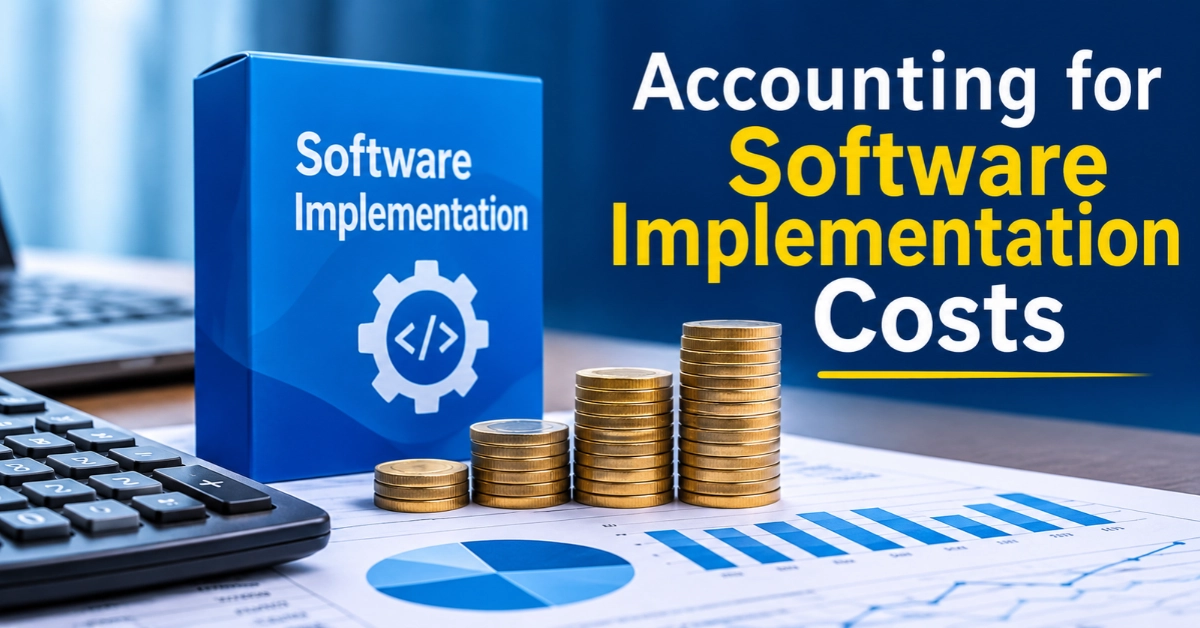
Accounting for Software Implementation Costs, Is important for businesses that use software to manage their daily work. It helps companies record software-related expenses correctly and manage their budgets. Accounting for software implementation costs may include expenses for setup, configuration, testing and system integration. Proper accounting helps businesses prepare accurate financial reports and follow the relevant accounting rules.
How to Classify Software Implementation Costs
Businesses must classify costs correctly to Account for Software Implementation Costs according to the relevant accounting rules.
- Capitalized Costs: Eligible costs recorded as assets.
- Operating Expenses: Costs such as employee training, usually recorded as expenses.
- Prepaid Costs: Payments made for future services.
- Configuration Costs: Costs of setting up software, classified according to the work performed.
- Maintenance Costs: Ongoing support and routine updates, generally recorded as expenses.
Correct classification helps businesses Account for Software Implementation Costs accurately and maintain reliable financial records.
Accounting Rules for Software Implementation Costs
Accounting for software implementation costs helps businesses record expenses correctly and follow accounting standards.
- Identify Costs: List expenses for software setup, testing and configuration.
- Check Software Type: Determine whether the software is cloud-based or installed.
- Record Expenses: Record costs according to relevant accounting rules.
- Separate Costs: Identify which costs are assets and which are expenses.
- Follow Standards: Apply the correct accounting standards and company policies.
Proper accounting for software implementation costs helps businesses maintain accurate financial records.counting rules helps businesses classify software implementation costs correctly and maintain reliable financial statements.
How to Account for SaaS and Cloud Software Implementation Costs
SaaS and cloud software implementation costs must be recorded according to the services provided and the applicable accounting rules.
- Identify the Software Arrangement: Check whether the business owns the software or uses it through a cloud subscription.
- Review Configuration Costs: Determine whether software setup and customization costs qualify for capitalization or must be expensed.
- Record Data Migration Costs: Classify costs for moving data based on the work performed and relevant accounting standards.
- Separate Training Costs: Employee training costs are generally recorded as expenses when the training service is received.
- Check Third-Party Services: Review contracts with external providers to understand which services are included in the implementation.
- Determine Whether Costs Can Be Deferred: Under US GAAP, certain eligible implementation costs for a cloud hosting arrangement may be deferred and recognized over the hosting service term.
- Keep Proper Records: Save invoices, contracts and other documents that explain the nature of each cost.
Correct accounting helps businesses record cloud software implementation costs accurately and follow the relevant accounting standards.
Software Implementation Costs at Each Project Stage
Software implementation costs can occur at different stages of a project, and each cost must be classified according to the work performed.
- Planning Stage: Costs related to evaluating business needs and preparing the software project plan.
- Configuration Stage: Costs of setting up software according to business requirements.
- Integration Stage: Costs of connecting the new software with existing systems and tools.
- Testing Stage: Costs of checking software performance and fixing problems before launch.
- Training Stage: Costs of teaching employees how to use the new software. These costs are generally recorded as expenses.
- Deployment Stage: Costs related to making the software ready for business use.
- Maintenance Stage: Costs of ongoing support, repairs and routine updates after implementation.
Understanding each project stage helps businesses classify costs correctly and apply the relevant accounting rules.
How to Record Software Implementation Costs in Journal Entries
Journal entries help businesses record software implementation costs and maintain accurate financial records.
- Recording Expense Costs: Debit the relevant expense account and credit Cash or Accounts Payable when recording costs that must be expensed.
- Recording Capitalized Costs: Debit the Software Asset account and credit Cash or Accounts Payable when costs qualify for capitalization under the applicable accounting rules.
- Recording Vendor Payments: Debit Accounts Payable and credit Cash when paying a vendor for an amount previously recorded as payable.
- Recording Amortization: Debit Amortization Expense and credit Accumulated Amortization when amortization applies to capitalized software costs.
- Keeping Supporting Documents: Save invoices, contracts and payment receipts to support each journal entry.
Correct journal entries help businesses track implementation spending and prepare reliable financial statements.
How to Calculate Software Implementation Cost Amortization
Calculating software implementation cost amortization helps businesses spread eligible costs over the appropriate period.
- Identify Eligible Costs: Determine which implementation costs qualify for capitalization under applicable accounting rules.
- Determine the Useful Life: Estimate how long the software will provide benefits.
- Calculate Total Capitalized Costs: Add all eligible costs that qualify for capitalization.
- Determine the Amortization Period: Use the appropriate period based on the software’s useful life and accounting standards.
- Choose an Amortization Method: Select a systematic method that reflects how the software’s benefits are used.
- Calculate Annual Amortization: Divide the capitalized cost by the useful life when using the straight-line method.
- Record Amortization Expenses: Record the appropriate expense in each accounting period once amortization begins.
- Review Costs Regularly: Reassess the useful life and review costs when circumstances or accounting requirements change.
- Example: If a business capitalizes $12,000 in eligible software implementation costs over three years, the annual amortization expense is $4,000 using the straight-line method.
Accurate amortization calculations help businesses manage software implementation costs and maintain reliable financial records.
Practical Example of Software Implementation Cost Accounting
Suppose a company spends $10,000 to implement new business software, including $5,000 for configuration, $2,000 for data migration, $1,000 for employee training and $2,000 for system testing. The company must review each cost and apply the relevant accounting rules to decide which amounts can be capitalized and which should be recorded as expenses. For example, employee training costs are generally expensed, while some configuration and testing costs may qualify for capitalization. By classifying each cost correctly and recording proper journal entries, the company can maintain accurate financial records and report its software implementation costs correctly.
Common FAQs About Accounting for Software Implementation Costs
Here are some FAQs of Accounting for Software Implementation Costs:
Who Is Responsible for Tracking Software Implementation Costs?
Accountants usually work with IT and project teams to track and classify implementation costs.
Can Software Implementation Costs Be Included in a Project Budget?
Yes, businesses can include setup, configuration, testing and other related costs in their project budgets.
What Documents Are Needed for Software Cost Audits?
Common documents include vendor contracts, invoices, payment records and project cost reports.
How Often Should Software Implementation Costs Be Reviewed?
Businesses should review costs regularly during implementation and before preparing financial statements.
What Happens When a Software Project Is Cancelled?
Businesses should review any capitalized costs to determine whether they remain recoverable under the applicable accounting rules.
How Do Software Implementation Costs Affect Business Budgets?
These costs increase project spending and can affect future budgets if additional support or upgrades are required.
Why Should Businesses Separate Internal and External Implementation Costs?
Separating employee-related costs from vendor charges helps businesses track spending and apply the correct accounting treatment.
Can Software Implementation Costs Change After Project Completion?
Yes, additional work, contract changes or new information may require businesses to review previously recorded costs.
Conclusion
Accounting for software implementation costs helps businesses manage their software spending and maintain accurate financial records. Companies should classify costs carefully and follow the relevant accounting standards, such as US GAAP or IFRS. Proper cost tracking, correct journal entries and regular reviews can reduce accounting errors. By applying the right accounting methods, businesses can make better financial decisions and manage software projects more effectively.